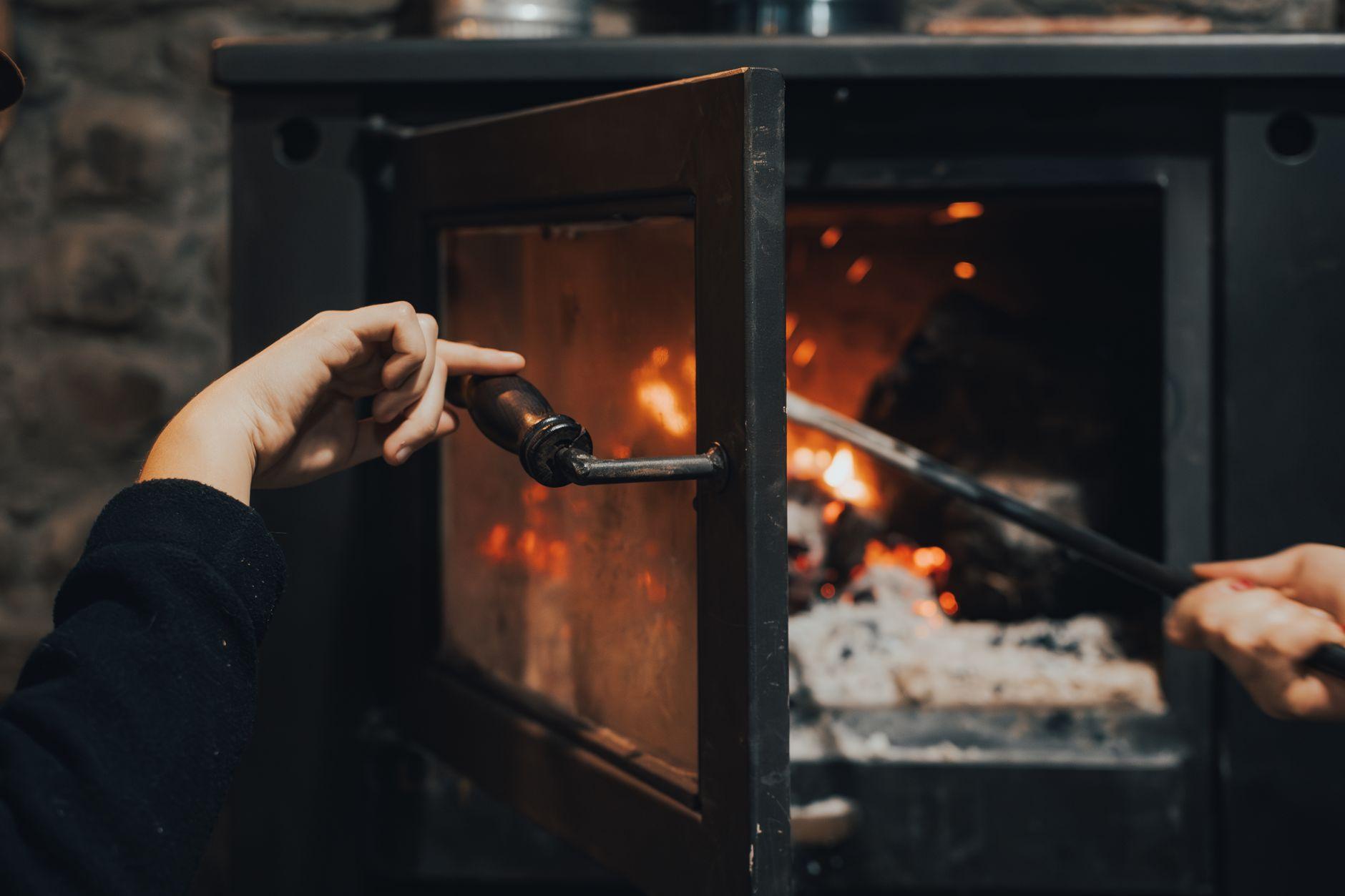
Two different jobs that share a ladder
Homeowners around Stanton often ask for "a chimney cleaning and inspection" as if it were one thing. They are two jobs with two different products. A sweep removes what has built up in the flue. An inspection produces a written report of what condition the chimney is in. One leaves the chimney cleaner. The other leaves you knowing more. Most of the time you want both, and the question is the order and whether you need both this year.
What a sweep gives you
A chimney sweep is from $395. The technician protects the hearth and floor, brushes the flue from the firebox to the top, clears the smoke shelf, and bags what comes down. The point of a sweep is to take fuel away from a future chimney fire and to open the flue so smoke can rise freely.
What you take away from a sweep is mostly the result: less creosote, a fireplace that draws better. You do not get a formal record of the chimney's condition, although a good sweep will tell you about anything obvious they saw.
What an inspection gives you
An inspection produces paper. Our Level 1, at $160, is a visual report of the firebox, damper, throat, crown, cap and the roof connection, with a photo and a label on each finding. Our Level 2, at $370, adds a filmed run up the full flue plus the attic and the chimney base, and you receive the video with the report.
What you take away is a document you can act on, file or pass along: to a buyer, a landlord, an insurer, or yourself next year.
Which order works
When both are booked, the sweep goes first. A flue coated in soot hides cracks and gaps, and a camera filming that coating records soot rather than tile. After a sweep, the joints and surfaces are bare, and the inspection can say something real about them. We book the two as one visit, in that order, whenever we can.
If you only want one this year
- You burn wood most weekends in winter. The sweep is the one to keep. Creosote is the risk, and only brushing removes it. Add the $160 visual report if you can.
- You burn wood a few times a year. Build-up is slow. A visual report each year, with a sweep when it shows the flue needs one, is a sensible rhythm.
- You have a gas fireplace. There is no creosote to clear. The inspection is the job that matters, because the risks are rusted vents, a loose cap and pilot parts.
- The fireplace has sat unused for years. Start with the inspection. Nests, debris and water damage come first, and a sweep may be part of the fix.
- You are buying, selling or changing appliances. You need the Level 2. Book the sweep with it so the camera has something to see.
What decides the price of the visit
The sweep price starts at $395 and rises with how much has built up and how hard the top is to reach. The inspection price is fixed by level. Put together on one visit, you pay the sweep plus the inspection level you choose, and nothing in the inspection price changes because of what the sweep finds.
Book a sweep, an inspection, or both, and tell us how often the fireplace burns and what fuel it uses; we will suggest the combination before we set the visit.
What a sweep can turn up
A sweep is not an inspection, but the debris tells a story. Large flakes of shiny, hard creosote suggest the fire has been starved of air. Chunks of clay or mortar mean something in the flue is breaking down. Rust flakes point to a damper or cap in trouble. When those turn up, we say so, and we suggest the inspection level that would answer the question properly.
What an inspection can lead to
An inspection can lead to a sweep, a repair or nothing. Every repair it finds gets its own written quote. If the finding is "monitor," there is no job, only a note for next year's report. If you want to know what a good report looks like before you book, our post on what a good chimney report shows has a sample layout, and the chimney sweep page describes the brushing visit.
Gas fireplaces get a different visit
A gas log set or a sealed gas unit burns clean enough that soot is rarely the issue, so the sweep often drops out of the picture. What we look at instead is the venting: whether the vent pipe or flue is clear of nests, whether the cap is still fastened, whether rust has started where the vent meets the roof, and whether the glass and its seal are intact on a sealed unit. All of that goes into the report the same way as a wood fireplace, with a photo and a label beside each part. If the gas unit sits inside an old masonry fireplace, the brick chimney around its vent still gets a full look.
Picking a time of year
Most Stanton owners want the chimney ready before the first cold evening, so autumn fills up first. Spring and summer are quieter and work just as well, especially if the report turns up a repair, because masonry and roof work go more smoothly in dry weather. A spring visit also means any repair is finished long before you want a fire.
Book the pair
Homes across Stanton, Cypress, Fountain Valley and Tustin can book both on one visit. Use the contact page to say what the fireplace burns and how often, and we will line up the sweep and the report in the right order.
Get a Report on Your Own Chimney
Dunlap Chimney Experts inspects to the NFPA 211 levels and photographs every part, then marks each one sound, watch or repair. Visits go out from Stanton to Cypress, Fountain Valley, Tustin and the rest of Orange County.